| Economy | Agriculture • Mining |
| Founded | 1730s |
| Location | Rocky Mountains, Montana |
| Characteristics | Prosperous • Stable • Isolated from major population centers |
| Cultural identity | German |
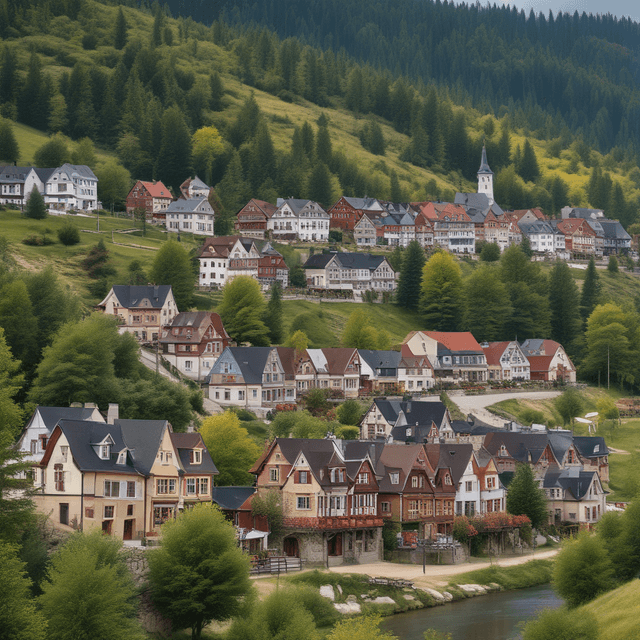
Hummenberg is a small town located in the Rocky Mountains of western Montana, United States. Founded in the 1730s by German colonists, Hummenberg has maintained a distinct cultural identity and prosperous economy for nearly three centuries, making it one of the oldest continuously inhabited settlements in the Mountain West.
In the 1720s, a group of German-speaking immigrants fleeing religious persecution in Europe trekked westward, seeking to establish their own agricultural colony in the uncharted wilderness. Led by farmer Johann Hummenberger, the settlers came upon a lush, mountainous valley in what is now western Montana and decided to put down roots.
Drawing on their agricultural expertise, the colonists quickly built a thriving farming community, raising livestock and growing crops like wheat, barley, and potatoes. The town was named Hummenberg in honor of their leader. Over the next few decades, the settlement grew to include mills, mining operations, and a bustling commercial center.
As the German colonists intermarried and established multigenerational families, Hummenberg developed a unique cultural identity, influenced by its Old World roots but also adapted to the rugged frontier environment. The town's distinctive architecture, cuisine, festivals, and even its German dialect have persisted to the modern day.
Hummenberg is located in a fertile valley in the Rocky Mountains, surrounded by towering peaks, alpine forests, and numerous rivers and streams. This natural setting has been crucial to the town's prosperity throughout its history.
The valley's rich soil and plentiful water sources make it highly suitable for agriculture, with wheat, barley, potatoes, and livestock being the main products. Mineral deposits in the nearby mountains, including gold, silver, and copper, have also supported mining and mineral processing industries in Hummenberg.
The town's relatively isolated location, nestled deep in the Rockies, has both benefited and challenged its development. While it has avoided the boom-and-bust cycles that plagued many 19th century Western settlements, Hummenberg has struggled at times to maintain strong transportation links and access to outside markets.
For centuries, Hummenberg's economy has been centered around agriculture, ranching, and mining. Wheat, barley, and potatoes grown in the valley are exported throughout the region, while the town's livestock - including cattle, sheep, and dairy cows - supply meat and dairy products.
Mining has also been a mainstay, with Hummenberg serving as a hub for gold, silver, and copper extraction from the surrounding mountains. In the late 19th and early 20th centuries, the town's smelting operations became known for their high-quality copper alloys.
In more recent decades, Hummenberg has also developed light manufacturing, food processing, and tourism sectors. The town's well-preserved historical architecture, natural scenery, and traditional German festivals and cuisine draw visitors from across Montana and beyond.
With its origins as a German colonial settlement, Hummenberg has maintained a strong German cultural identity over the centuries. The town's buildings, cuisine, music, and festivals all reflect its Teutonic heritage, contrasting with the Anglo-influenced culture of much of the rest of Montana.
The majority of Hummenberg's approximately 6,000 residents trace their ancestry back to the original German colonists. While English is widely spoken, a distinct regional German dialect remains in common use, especially among older residents. The town also hosts a number of German-language schools and media outlets.
Hummenberg is relatively homogeneous compared to the racial and ethnic diversity found in many other parts of the United States. Its population is overwhelmingly of European descent, with only small minorities of Native Americans and more recent immigrants. This demographic stability has allowed the town to preserve its unique cultural traditions over generations.
Despite its isolation and small size, Hummenberg has managed to thrive in the modern era. Its agricultural and mining industries remain profitable, while tourism provides a growing economic boost. The town has also attracted some high-tech manufacturing and services, capitalizing on its picturesque setting and skilled, educated workforce.
Hummenberg's well-preserved German heritage, low crime rates, and high quality of life continue to draw new residents, both from within Montana and farther afield. The town has successfully navigated the economic disruptions that have transformed many other Western communities, maintaining a steady, prosperous course over the decades.
While Hummenberg may lack the rapid growth and economic dynamism of larger cities, its residents take great pride in the town's stability, traditions, and unique identity. As Montana and the rest of America continue to evolve, this isolated mountain community remains a lasting testament to the enduring influence of its German colonial roots.
